| Pop Culture Gadabout | ||
|
Friday, November 27, 2009 ( 11/27/2009 12:49:00 PM ) Bill S. 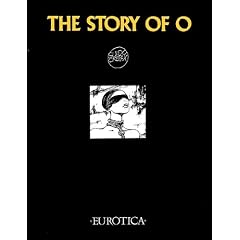 “WHAT IF HE LOVED ME?” A notorious work of sado-masochistic erotica originally published in France in the 1950’s, The Story of O has had more than its share of variably successful adaptations over the years. Arguably, the most successful attempt to translate Paule Reage’s infamous paean to female subjugation into another medium is Italian comic artist Guido Crepax’s graphic novel version. Originally published in the states by NBM in 1990 (the first title to be released by this publisher), The Story of O has just been reissued in a handsomely mounted shrink-wrapped deluxe hardcover edition – the perfect holiday gift for the submissive in your life. “WHAT IF HE LOVED ME?” A notorious work of sado-masochistic erotica originally published in France in the 1950’s, The Story of O has had more than its share of variably successful adaptations over the years. Arguably, the most successful attempt to translate Paule Reage’s infamous paean to female subjugation into another medium is Italian comic artist Guido Crepax’s graphic novel version. Originally published in the states by NBM in 1990 (the first title to be released by this publisher), The Story of O has just been reissued in a handsomely mounted shrink-wrapped deluxe hardcover edition – the perfect holiday gift for the submissive in your life.I kid, but the fact is that unless you’re genuinely titillated by this time of material, both the source novel and its adaptation can be fairly tedious going. The book’s title heroine is a calculated cipher (her name “O” can be read as both a letter and a zero): the only thing we know about her outside the world of dominance-and-submission is that she’s a fashion photographer. Story depicts this leggy vessel's incremental submersion into the role of a submissive with mind-numbing specificity. Crepax is studiously faithful to this process, but after a while all the images of anonymous fondling and whipping grow repetitious. The Italian erotic artist has a clear love for a certain kind of female form — you see O from all angles — and there are some elegant wordless images within the graphic novel. The book opens with our heroine being taken to Roissy, the sinister chateau where she will initiated into her new life, where is she first blindfolded, cuffed from behind, fingered by a series of anonymous men and then whipped. “We want to hear her scream,” one of the nameless men of privilege says, and as she’s whipped Crepax provides a lot of tiny panel close-ups of our heroine’s lips and eyes. The visual device emphasizes the way our initiate is both being broken down and objectified, and while the technique is effective, you can’t help wishing that it was being used on a character we cared about. Yeah, I know: erotica ain't about character. Story of O is mainly about flagellation, submission, sex with animals and bestial men, power and the abrogation of power, labial piercing and branded buttocks, not to mention the eerie power of walking around naked with an owl mask over your head. Crepax is such a masterful comics artist that his treatment of this material results in some truly arresting moments (a one-page portrait of O being led in chains by an ape-like man, the disturbing panels showing the bird-masked protagonist being led through a party of partying aristos), but there’s a lot of ho-hum stuff in between. Like the book on which it’s based, Crepax’s Story takes its transgressive material and makes it a bit of a slog. Labels: art comics # |Thursday, November 26, 2009 ( 11/26/2009 06:57:00 AM ) Bill S.  “EVERYBODY’S BEEN PLEASANTLY SHOCKED BY YOUR USEFULNESS.” The idea of yaoi -- “boy love” romances aimed at a young girl audience -- is one that raises more than a few Western eyebrows. But the manga sub-genre is a successful one in its native Japan, and, judging by the success of titles like Sanami Matoh’s Fake, has developed an audience in this country, too. Yaoi has become popular enough that American manga publisher Tokyopop even developed a line focused on this stuff, Blu Manga, of which Hinaka Takanaga’s Liberty Liberty! is one of the latest examples. “EVERYBODY’S BEEN PLEASANTLY SHOCKED BY YOUR USEFULNESS.” The idea of yaoi -- “boy love” romances aimed at a young girl audience -- is one that raises more than a few Western eyebrows. But the manga sub-genre is a successful one in its native Japan, and, judging by the success of titles like Sanami Matoh’s Fake, has developed an audience in this country, too. Yaoi has become popular enough that American manga publisher Tokyopop even developed a line focused on this stuff, Blu Manga, of which Hinaka Takanaga’s Liberty Liberty! is one of the latest examples.Got to admit I’m a relative newbie when it comes to yaoi. Read the first volume of Fake many moons ago, but never followed up on it, so I’m coming to this material fairly fresh. Liberty Liberty centers on a young boy named Itaru Yaichi, who we meet post-bender, lying on a pile of trash bags with little memory of how he got there. (“This tangy yet bitter odor,” he thinks, could it be my own barf?”) Would-be writer Itaru has fled the city of Tokyo for Osaka and is broke and homeless, but he soon is rescued by Kouki, a handsome ponytailed TV cameraman who has staked out the alleyway where Itaru has drunkenly collapsed. Thinking the hungover boy is a celebrity stalker, he tries to take his picture, only to have Itaru grab and smash his camera. Despite this costly act, Kouki takes in the homeless runaway, introducing him to the rest of the crew at Himawara Cable, a ragtag indy TV station. These, predictably, turn out to an oddball bunch, none more than the flamboyant Karumi, the station’s cross-dressing “female” anchor. As Itaru finds a place for himself in this group and discovers himself growing more attracted to Kouki, we learn that the cameraman and anchorwoman share some history. Do they still have a thing for each other? Is Kouki jealous over Karumi’s current relationship with Kyobashi, the moneyman funding the station? It wouldn’t be a romance if you didn’t have such questions hovering in the air. Takanaga paces her developing romance slowly: though the first volume builds to a big kiss, we know there’ll be plenty of misunderstandings and miscues along the way. There’s a subplot relating to Itaru’s reason for fleeing the school he was attending in Tokyo and a bit pertaining to his need to pay Kouki back for destroying that camera, but these are both deeply secondary to the developing romance. Liberty Liberty!’s art is clean and expressive. The artist especially seems to have a good time with the effervescent Kurumi, while the contrast between the more hard-bitten Kouki and the neophyte Itaru is neatly conveyed, primarily through the characters’ eyes. (There are times when the latter looks like a wet, sad puppy dog.) There are a lot of yearning looks and moments when one character watches another from afar in this series, and Takanana is able to convey ‘em without overplaying her hand. The Older Teen series is rated for mild sexuality, mild violence and alcohol use, though you know the aspect that’ll get the blu-noses running is the boy/boy romance. This the manga writer/artist treats lightheartedly and without much to-do. When Itaru happily hugs and hangs onto Kouki, it’s treated as a simple expression of boyish glee. You have to wonder whether part of the appeal -- in this country at least -- of yaoi lies in its depiction of a world where differing human sexuality is no big deal. Labels: sixty-minute manga # |Wednesday, November 25, 2009 ( 11/25/2009 06:43:00 AM ) Bill S. MID-WEEK MUSIC VID: Here's a classic and seasonal bit of eighties garage punk from the Huxton Creepers, "Autumn Leaves": # | |
|
|